Write Newsletters Like a Pro: The 6 Most Common Email Marketing Mistakes
Ever feel like email marketing is dead? Quite the opposite! Email is one of the most effective marketing channels. The only things that are dead are boring, impersonal campaigns with poorly handled content and messaging. If you feel like nobody reads your newsletters and they aren’t earning you anything, you may be making one of the following mistakes.
In this article
Ever feel like email marketing is dead? Quite the opposite! Email is one of the most effective marketing channels. The only things that are dead are boring, impersonal campaigns with poorly handled content and messaging. If you feel like nobody reads your newsletters and they aren’t earning you anything, you may be making one of the following mistakes.
A weak subject line, the wrong greeting, confusing and irrelevant content or a missing call to action can drag down open rates and clicks far more than most brands care to admit. Let’s take a look at how to fix it.
1. A subject line that grabs nobody
The subject line is the first thing that decides whether the recipient will even open your newsletter. Yet we often see vague, interchangeable subject lines in our inboxes, like “News from our online store” or “Some inspiration for you”. Why would a customer open a newsletter like that?
A good subject line should grab attention, spark curiosity, show a benefit or tap into an emotion. One of the strongest emotions you can use is FOMO (fear of missing out) – the sense that a product or offer may soon disappear or slip away, e.g. a limited-time deal, limited stock or something that’s very popular with other customers.
Avoid long subject lines (they shouldn’t exceed 55 characters), and don’t forget the subject line’s sidekick – the preheader (the short text shown in the preview right after the subject). You can use it for extra information or to flow naturally on from the subject line. Squeeze the main message into the first few words. That way, it won’t be missed even by recipients who open the newsletter on their phone.
You can also get a little help from emoji. In most industries and target groups, well-placed emoji can increase open rates by up to 56% compared with text-only subject lines. One or two is plenty, though – overdoing it can hurt credibility and needlessly trigger spam signals. The same goes for exclamation marks.
2. A generic greeting for everyone and no one
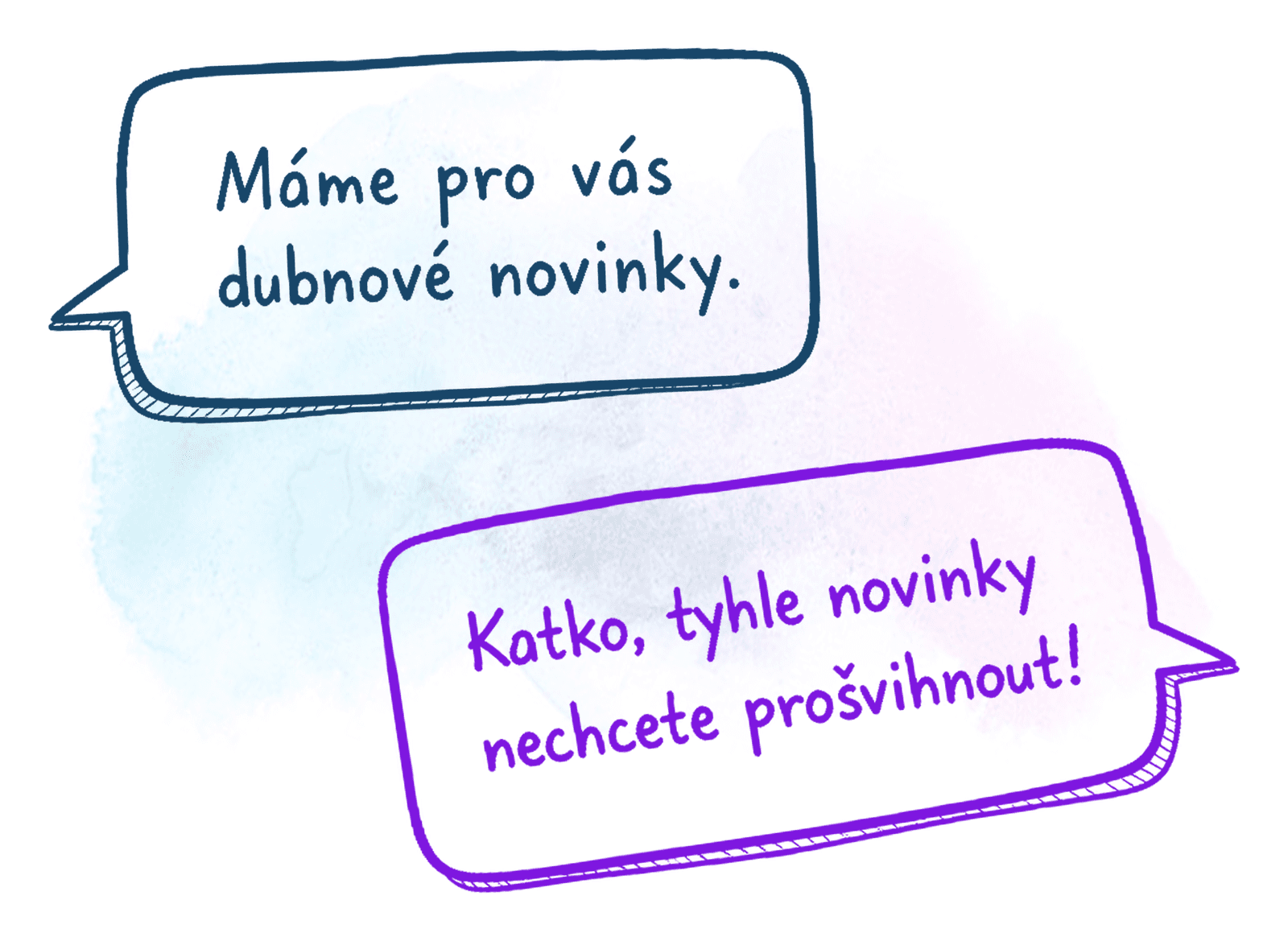
Another of the most common mistakes we see the moment a newsletter opens: the greeting. It’s the first point of contact in the body of the email, and it can decide whether you build a relationship with the customer or put up a wall in front of them.
If you use a greeting like “Hello Kateřina” (in Czech, without even the correct vocative form) or skip the greeting altogether and fire off “We’ve got April’s new arrivals for you!”, you’re losing customers. The recipient has no reason to pay attention, because the message looks like just another mass email.
What works much better is personalization and more specific wording. For example: “Jana, you won’t want to miss these new arrivals.” A greeting like that feels more personal and creates a natural sense of urgency.
The good news is that this is no longer complicated. Commonly used tools such as Leadhub, Ecomail and SmartEmailing can work with merge tags and Czech vocative rules for both genders, so if you have the data, nothing is stopping you from personalizing your greetings. (Of course, personalization isn’t just about the greeting – it’s also about proper segmentation, but that’s a topic for another day…)
3. A newsletter without a clear main message
Another common mistake. You want the customer to buy shoes, read your blog, enter a giveaway, follow you on Instagram and fill in a survey while they’re at it? Congratulations! They probably won’t do any of it.
Tempting as it is to cram everything you want to show off and everything on your mind into one newsletter, all you’ll end up with is a cluttered email and a confused, overwhelmed reader who has no idea what they’re actually supposed to do.
We know it’s not what you want to hear, but every newsletter should have just one main message. One thing you want the recipient to do after reading it. And you need to make it easy for them to do it. Avoid ten different CTA buttons. The more options you give people, the more likely they are to click nothing at all because of decision paralysis. Use two dominant CTAs at most to guide the recipient clearly to where you need them.
4. You talk mostly about yourself
Do your newsletters sound something like this?: “We’ve launched a new collection.”, “We’ve expanded our range.”, “We’ve prepared something for you.” That’s great, and it may all be true, but do you think the customer will read it and say, “Great, that’s just what I needed”? They won’t. The customer really doesn’t care what you’ve done.
A well-written newsletter has to make it clear what’s in it for them. What it will make easier, how it will help them, or why they should care right now. Try changing your perspective: instead of describing company updates, flip your messaging into benefits for the recipient.
5. Text that’s too long and has no structure
A newsletter isn’t a blog post, and time is precious these days. People only scan newsletters; they don’t read them word for word. If they hit long blocks of text with no clear structure, they lose interest very quickly.
The natural way people “read” websites and newsletters to find out whether they’re interesting is in the shape of the letter F (the F-pattern). So put the most important information at the beginning and along the left edge. Use clear, concise paragraphs, headings, bullet points and numbered lists and don’t be afraid of white space, which reduces visual load and improves readability. Support key information with bold text or a dominant color. In short, within a few seconds the reader should understand what the email is about, why it’s relevant to them and what to do next.
You can also break up the text with graphics, but remember to keep the image-to-text ratio at 60:40 in favor of text. That way, email clients won’t flag your newsletter as spam.
6. An unclear or missing call to action
It’s basic, yet many brands overlook it: a missing or unclear CTA. The recipient reads the email but, by the end, has no idea what to do. Or they do know, but the call to action isn’t convincing enough. A CTA like “Find out more” or “More information” is too generic.
What works much better is a specific call to action tied to the email’s content such as “Choose your option” or “Book a slot”.
Simply put, the more clearly you tell people what to do next, the more likely they are to actually do it. A strong CTA helps not only clarity but also the performance of the whole newsletter.
The takeaway
As email marketing specialists, we know that the difference between a newsletter people open (and buy from) and one that ends up in the trash (or worse, in spam) lies in the details. Email marketing still has one of the highest ROIs, but only if you don’t approach it with a “let’s just send something out” attitude. If you’re making basic mistakes like generic greetings, weak subject lines or missing CTAs, you’re needlessly giving away performance.
Even with our guide, still don’t feel confident tackling email marketing properly? Or need help with something else? Get in touch! We’ll go over your goals together and take a comprehensive look at your email marketing – from choosing a platform and strategy to regular campaigns.