Introduction to Offline Marketing
That offline marketing is an unnecessary and outdated discipline? Wrong. Read on to discover what it encompasses and how it can still be valuable even in today’s internet age.

In this article
That offline marketing is an unnecessary and outdated discipline? Wrong. Read on to discover what it encompasses and how it can still be valuable even in today’s internet age.
The king is dead, long live the king. This is how the decline of offline marketing and the increasingly dominant role of its online counterpart, constantly discussed across all media – ironically, even in offline ones – may seem to some of us. As the data shows, the share of online marketing is growing worldwide. For example, in retail, e-shops in the Czech Republic claimed 17% of the total market in 2021, with further growth expected. This has led to ever-increasing budgets for online activities at the expense of offline ones.
What is Offline Marketing and Why Do We Use It?
Simply put, offline marketing refers to marketing efforts that occur outside the internet. The most common questions we encounter are about what exactly it includes. „Does it involve billboards, flyers, or TV ads? And does our company even need it?“ These and similar queries come up almost every time offline marketing is discussed.
If we truly want to succeed in today’s market, the answer to the last question is yes. Offline marketing can be useful, for example, when opening a new physical store and wanting to provide directions from across town to guide customers to the location.
It can also be necessary when we’ve reached the maximum potential with online performance campaigns and want to scale further. In such cases, offline marketing could be the next step.
Additionally, it plays a role in PR activities when we want to speak about our company in media outlets, magazines, or journals. Offline marketing is also a vital component of a store’s interior, ensuring customers can easily navigate (primary and secondary signage) and find products without assistance from staff.
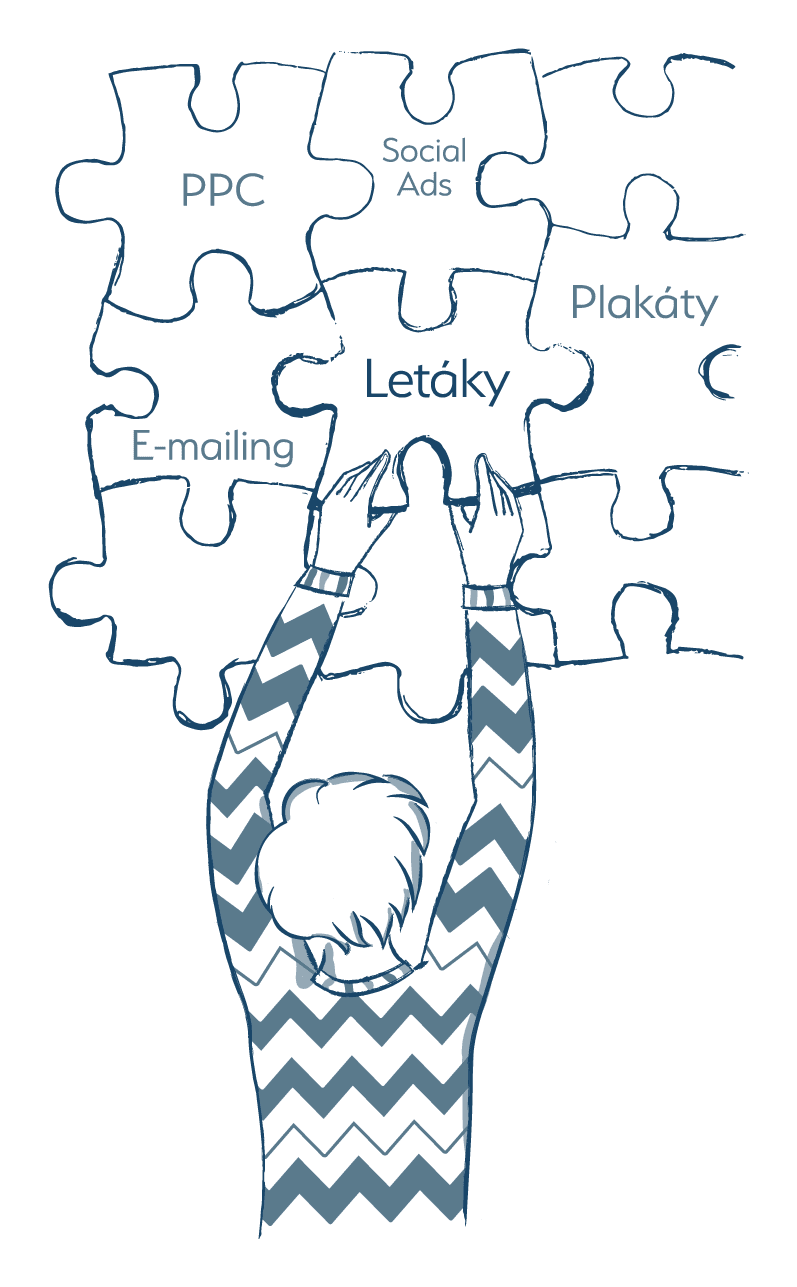
Basic Breakdown of Media Types
OOH (Out of Home):
- Billboards, bigboards, megaboards, and more
- PVC banners
- CLV (city light vitrines)
- Hypercubes
- Large digital screens
- Poster boards
- Benches
Flyer Campaigns:
- Addressed distribution
- Unaddressed distribution
Radio Campaigns:
- Classic ad spots (15s, 20s, 30s)
- Sponsorship of program segments (ad spot played before or after sponsored segments, such as weather or traffic reports)
- Live reports from the point of sale
- Competitions
Print Media (Prints):
- Classic advertisements
- PR articles
- Interviews with company owners
- Editorial support
- Editorial testing („Tested by the team“)
- Expert advice
- „Caught our attention“
- And more…
TV Advertising:
- Sponsorship spots
- TV sponsorship
- Teleshopping
- TV product placement
Other Options:
- Gas Stations: Use of CLV displays, Sleeves on fuel pump nozzles, Door wraps
- Cinemas: On-screen (ad slots before the movie), Off-screen (LED screens, promo stands, popcorn box branding, posters, etc.)
- Airports: CLV, PVC banners (indoor, outdoor), Roll-ups, Megaboards, Baggage carousel advertising, Window graphics, Flags
- Public Transportation: Trains, trams, bus stops, trolleybuses, Wi-Fi sponsorship in public transport
Practical Use of Offline Marketing
Each of the offline marketing methods mentioned above offers countless possibilities for implementation and cross-channel integration. For instance, we can rent billboards near a competitor’s store or place directional visuals on roads leading into the city to guide customers to our location. In flyer campaigns, we can target city centers or suburban areas and surrounding villages within a specified range. For B2B marketing, focusing geographically on companies based on size, number of employees, industry, or turnover can be effective.
When it comes to radio campaigns, decisions are based on media metrics such as net reach, GRP’s (gross rating points for the target audience), affinity (the suitability of the ad for the target audience), CPT (cost per thousand impressions or listens), and average frequency. These metrics guide us in selecting the most appropriate campaign type.
Evaluating Offline Campaigns
Before launching any campaign, it’s essential to define the purpose and reason behind its execution. These set goals will then determine how we evaluate the campaign’s success.
For example, if we aim to increase revenue at a physical store, key performance indicators (KPIs) might include store footfall and revenue growth. If we find that store traffic has significantly increased but revenue hasn’t, it’s important to investigate why. Were the promoted products displayed properly? Did we have enough stock? Did we train the sales staff on how to sell this product? Was the pricing strategy correct?
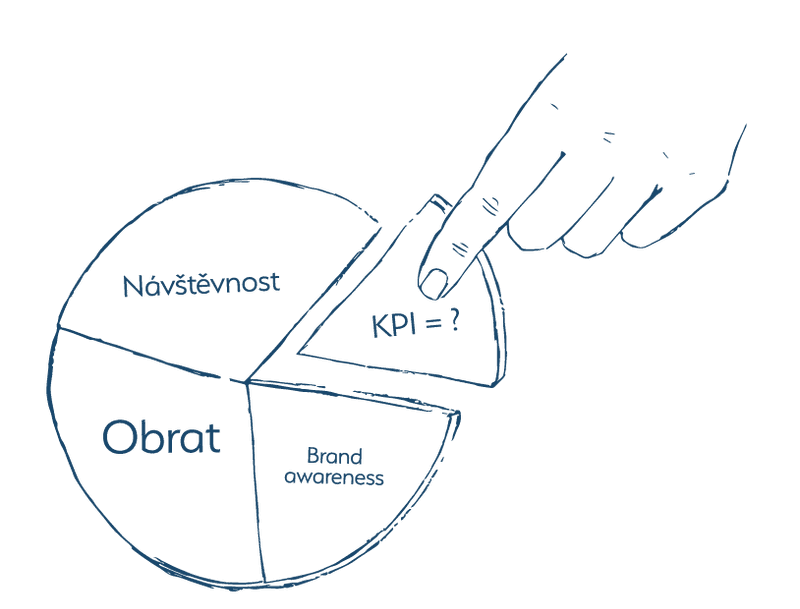
Another goal of offline campaigns may be to increase awareness of our brand. In such cases, we evaluate success based on brand recognition surveys among people. Surveys are typically conducted before and after the campaign. By comparing their results, we assess whether the campaign fulfilled its purpose.
The idea is always key
However, before launching any campaign and purchasing media space, it is extremely important to stop and think. We may have the most visually appealing billboards in the best locations in the city, distribute half a million flyers, but if the idea and content are missing, the campaigns will never work. Therefore, it is important to start with careful consideration of how to execute everything.
From the above, it is clear that offline marketing is certainly not a simple discipline. If the campaigns are not well thought out and set up, they can do more harm than good. The rule „measure twice, cut once“ applies here. Instead of launching campaigns hastily, without a core idea and clearly defined goals, it is better to invest your resources elsewhere with more thought.
If you are struggling with offline marketing and would like a guide to help you through this issue, contact us and schedule a meeting. We will gladly help you with this traditional but still very useful type of marketing.