How Much Does Online Marketing Cost?
“How much is online marketing going to cost us?” It's one of the first questions we hear. An honest answer isn't a number but an explanation: what the cost is made of, what drives it, and how to work out from your margin and PNO how much you can afford to spend on ads.
In this article
- How much does online marketing cost?
- What online marketing costs are made of
- What drives the cost of online marketing
- Is “how much will the campaigns cost me?” the right question?
- How to think about online marketing
- PNO, ROAS and ROI: how to protect your ad investment
- How to calculate PNO
- How to set the optimal PNO
- Why the time horizon matters
- How 4Bros sets the price
Asking how much online marketing costs is perfectly reasonable. If you're putting money into it, you want to know what to expect. But there's no single figure that fits every business. So you won't find a price list here. Instead, you'll find a way to break the costs down, understand them and check them against your own margin.
How much does online marketing cost?
Online marketing has no single price tag. The total cost has three parts: the money spent on the ads themselves, the work on strategy and campaign management, and production, meaning creative, content, website and measurement. How big each part is depends on your goals, your competition and what you can afford to pay for a customer.
Anyone who gives you a number without knowing your margin, product range and goals is guessing. And in marketing you pay for guesses twice: once for ads that don't work, and again for the time you lost on them.
What online marketing costs are made of
Online marketing costs come down to four items: the ad budget that goes straight to the platforms, strategy and management you pay people for, production of creative and content, and the technical foundation of website and measurement. The auction prices the first, work drives the rest. It helps to track them separately, because each answers a different question.
- Ad budget (ad spend): what you pay Google, Seznam or Meta for impressions and clicks. You set it yourself and in Google Ads you can change it at any time. Keep in mind that a limited budget means fewer impressions and clicks.
- Strategy and campaign management: someone decides where to advertise, to whom and with what message, and someone looks after the campaigns week by week. A campaign nobody tends to wears out, like groceries forgotten in the boot of a car.
- Production: graphics, videos, ad copy, product photos, social content. Even the best-built campaign can't make up for weak creative.
- Technical foundation: a website or online shop that can sell, plus analytics and measurement, without which you can't tell what the ads actually brought in. This part is usually a one-off, but if it's missing you pay for it in every campaign that follows.
What drives the cost of online marketing
The cost depends mostly on what you want to achieve and how tough your market is. Competition in the auction, the number of channels, your product margins, the length of the sales cycle and the state of your website and measurement all play a part. That's why the same budget makes money for one company and barely gets another noticed.
- Goals. An online shop that wants to grow over the season, a manufacturer that needs enquiries from buyers and a brand nobody has heard of yet all have different costs.
- Competition. Search ads are sold in an auction. According to Google Ads Help, whether and where an ad shows depends on a combination of the bid, ad quality and the context of the search. The more companies compete for the same customers, the more each click costs.
- Number of channels. Google, Sklik, Meta, email, comparison sites. Each channel needs its own setup, creative and care. It only makes sense as a media mix where the channels support each other.
- Margin. It sets how much you can pay for an order or a customer and still make money on the ads. More on that below under PNO.
- Sales cycle. A face cream sells in one click, a production line after months of talks. A longer cycle means more touchpoints with the customer and a different way of measuring results.
- Website and measurement. A slow site, a complicated checkout or missing conversion tracking make everything else more expensive, because the ads bring people to a place where they won't buy.
Is “how much will the campaigns cost me?” the right question?
Better ask: how much can you afford to pay for one order or one customer and still have something left after the ads? Your margin answers that. Only once you know it does it make sense to talk about a budget, because then you know whether every crown in advertising earns money or just moves it to the platforms.
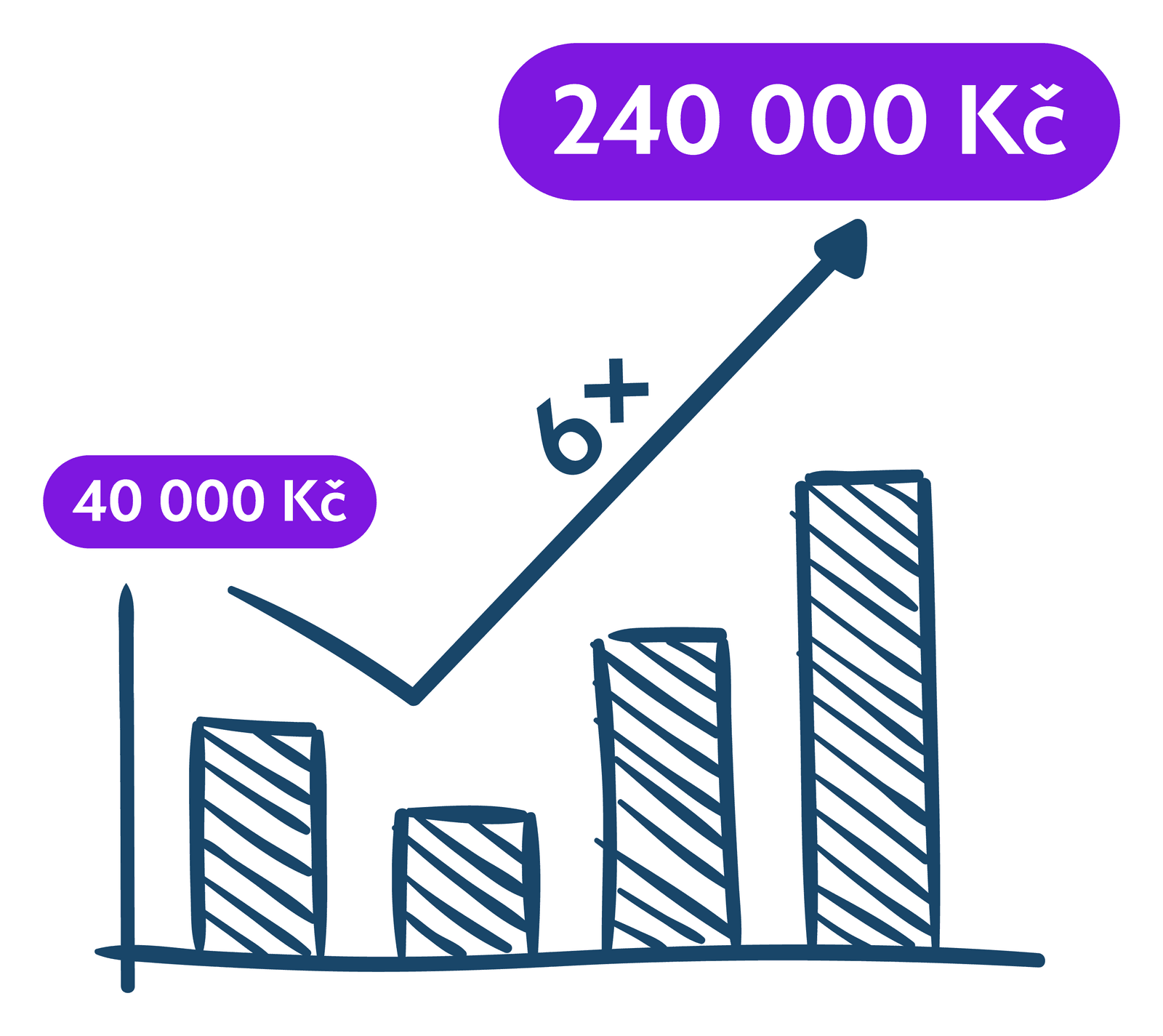
A common scenario: a company gets nervous about the size of the budget and cuts it to the bare minimum. The campaigns then run so thinly that they can't learn or sell anything, and the conclusion is that “ads don't work for us”. In fact, nothing was tested at all.
How to think about online marketing
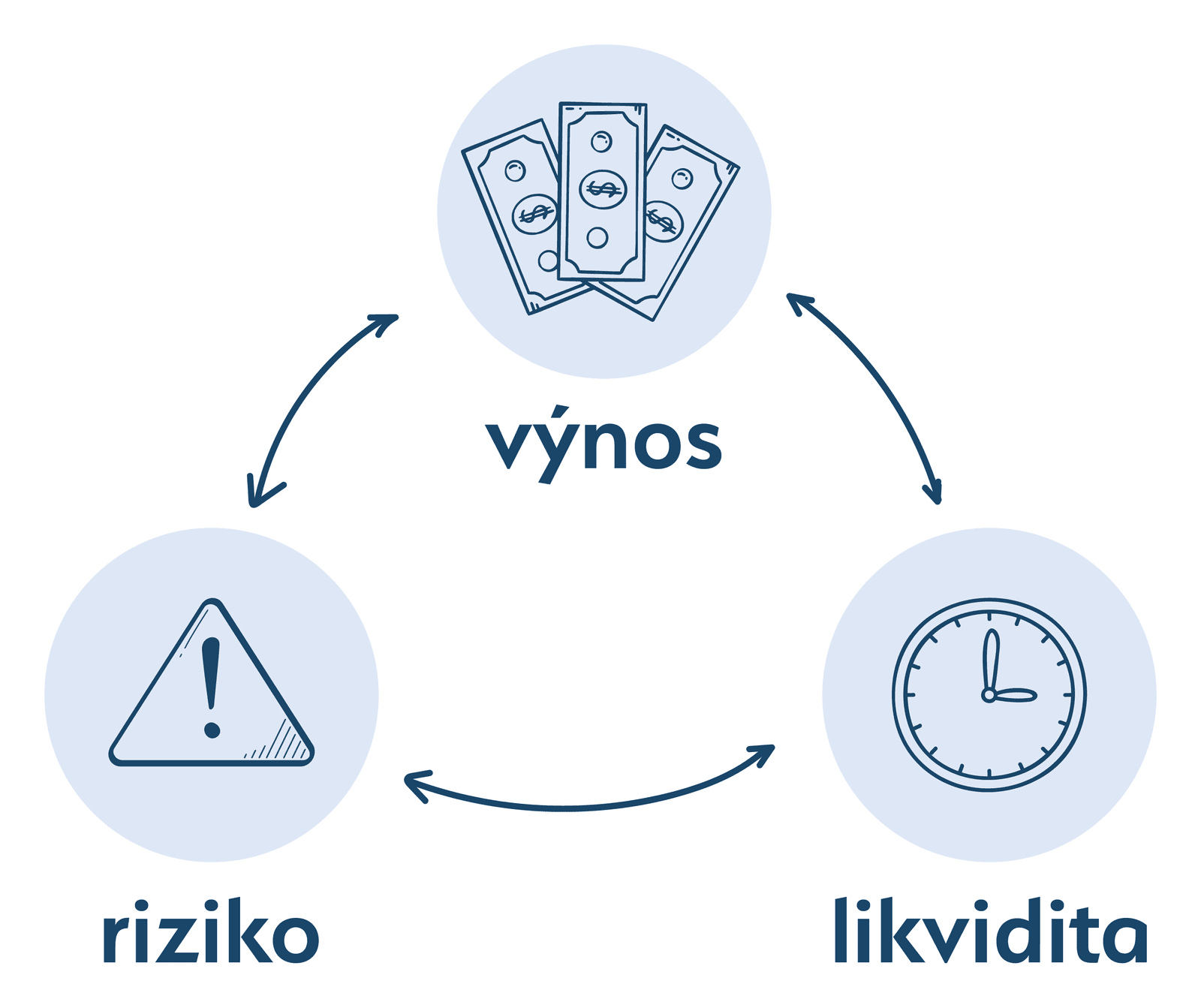
Treat ad money as an investment, not an expense. Every investment carries risk and is expected to return something, and both can be managed. Risk goes down with clearly agreed key performance indicators, or KPIs, and a threshold agreed in advance at which the ads still make money. The key ones are PNO, ROAS and, with precise costs, ROI.
Marketing investment also works on two levels. Performance campaigns harvest demand that already exists. Brand building creates it and pays back more slowly. Both belong in the budget, they're just measured differently. More in Brand building vs. performance.
PNO, ROAS and ROI: how to protect your ad investment
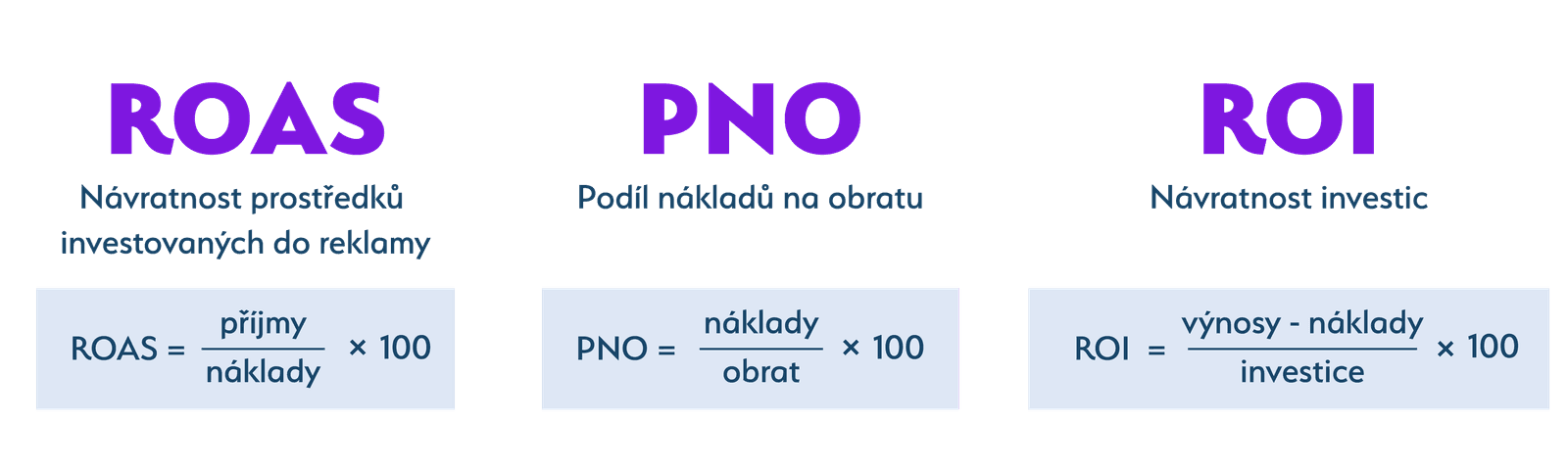
Metrics comparing what ads cost with what they brought in protect your investment. PNO shows what share of revenue went on advertising, ROAS how many times the ad money came back as sales, and ROI how much net profit was left after all costs. Without your margin, though, none of them tells you whether you're making money.
- **PNO** (the Czech “podíl nákladů na obratu”, cost of sale) = ad costs ÷ revenue from ads × 100%. The lower, the better.
- **ROAS** (return on ad spend) = revenue from ads ÷ ad costs. It's the inverse of PNO: a PNO of 20% equals a ROAS of 5, or 500%. Google Ads uses it in its target ROAS bid strategy.
- ROI (return on investment) = net profit ÷ all marketing costs including management and production × 100%. It's the most honest metric, but it needs precisely calculated costs. If you have them, use it.
How to calculate PNO
You calculate PNO by dividing your ad costs by the revenue the ads generated and multiplying by a hundred. If the ads cost a tenth of what they sold, PNO is 10% and ROAS is 10. Always calculate without VAT, otherwise PNO looks better than it really is and the whole calculation goes off track.
On its own, PNO means nothing. One company makes money at a PNO of 30%, another loses money at 5%. The difference is almost always the margin. An electronics retailer with a single-digit margin can't afford what a cosmetics brand with its own production can. We go into detail in PNO, ROAS and margin.
How to set the optimal PNO
You derive the optimal PNO from your margin. Subtract the costs that grow with every order, such as shipping, payment fees or packaging. What's left is your break-even point: the highest PNO at which the ads don't lose money. Set your target PNO lower, so there's a reserve left for fixed costs and profit.
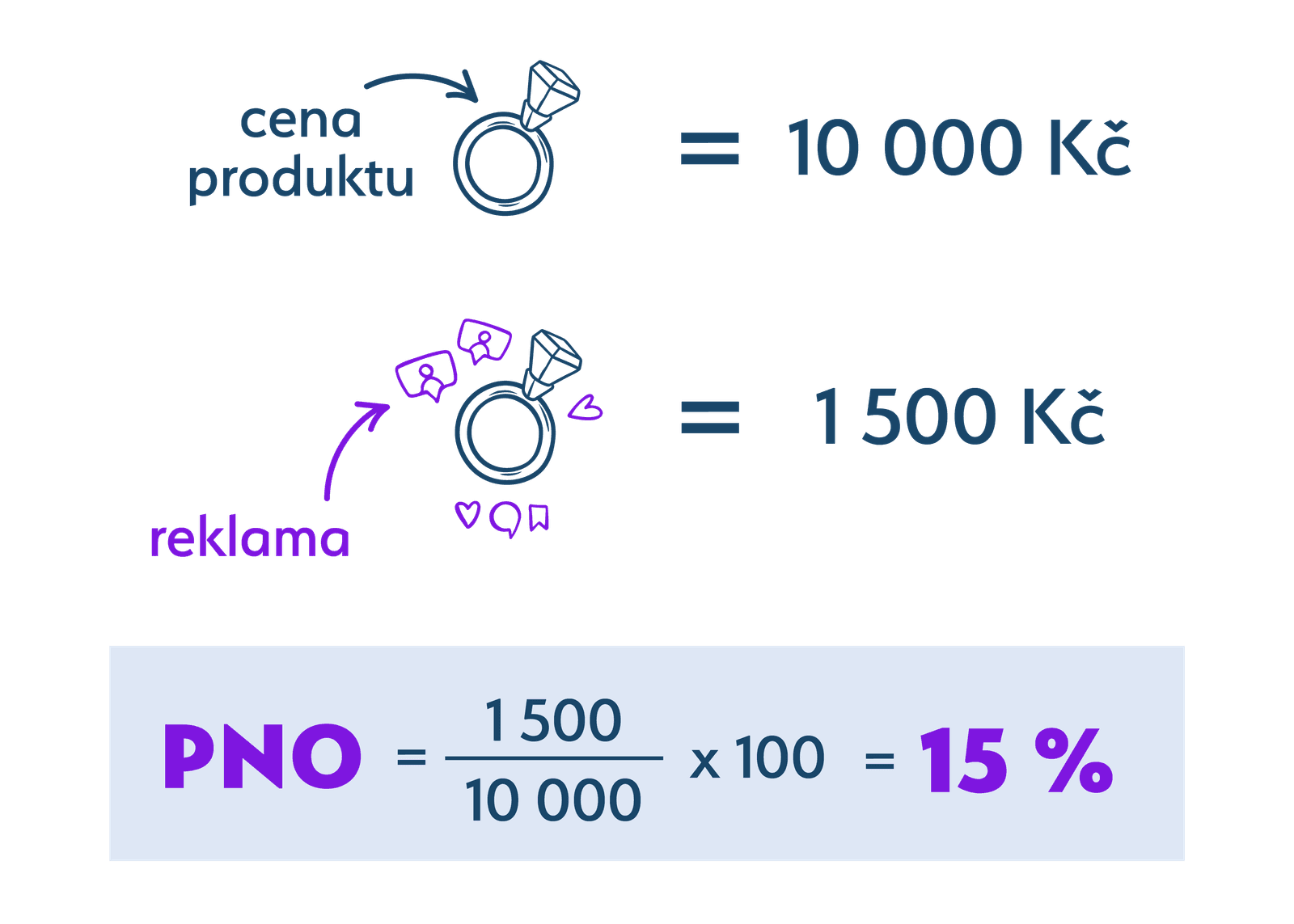
- Your margin after the cost of goods is 30% of the price without VAT.
- Shipping, payment fees and packaging you pay for come to 5%. Your contribution is therefore 25%, and that's your break-even PNO.
- After paying for the ads, you want to keep another 10% of revenue for fixed costs and profit.
- Your target PNO is 15%, which is a ROAS of about 6.7.
If you run campaigns at a PNO equal to your whole margin, you break even at best. In reality you're more likely to lose money, because PNO doesn't account for returns, complaints and fixed costs.
It works the other way too: when campaigns are profitable and PNO is below target, there's no point cutting the budget artificially. Every extra order under your PNO limit earns you money. So tell your agency your real margin. A lower figure “so they try harder” only costs you orders that would have paid off.
Why the time horizon matters
New campaigns don't pay off from day one, because the platforms are still learning whom to target. According to Google Ads Help, after a major change the learning status can show for up to seven days and performance settles within one to two conversion cycles. So agree in advance how long you'll wait and what you'll judge by.
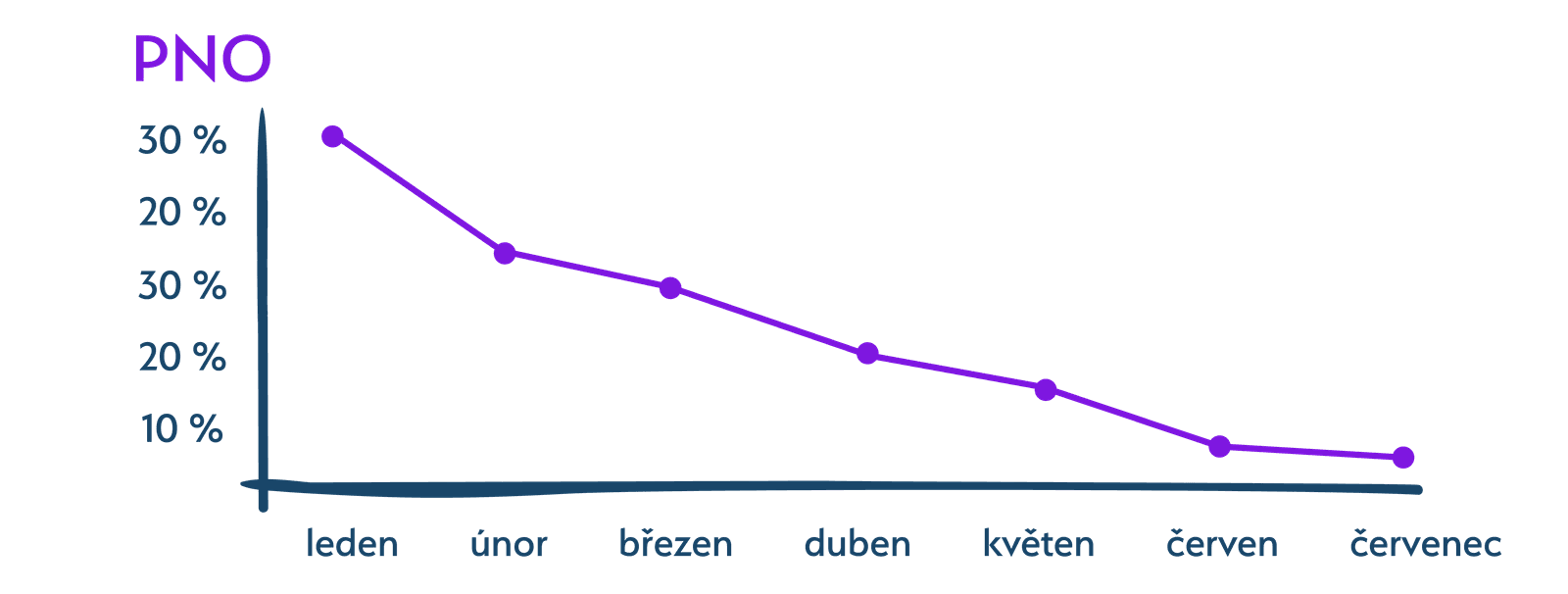
Google Ads Help recommends evaluating performance after two conversion cycles or two weeks, whichever is longer. For products people consider for weeks, it takes longer still. Switch a campaign off after a few days because PNO is still above target, and you often throw away the money that went into setting it up as well.
A simple agreement helps: at the start, set the target PNO, the period in which the campaigns should reach it, and what happens if they don't. Then you don't have to argue based on gut feeling.
How 4Bros sets the price
We set our price only after a business workshop. There we go through your margins, goals, customers and the state of your website and measurement. Only then do we know how much work it will take, which channels make sense and what ad budget can pay back. A figure from a price list would just be a guess.
What you get isn't just a price but a plan: what to do first, how much to put in and how we'll know it's working. If you're mainly interested in running campaigns, have a look at PPC campaign management.