Attracting customers with discounts? Be careful it doesn’t end up costing you more than expected
Since the beginning of this January, a new EU directive has come into effect that governs the rules for displaying discounts and product prices. Read on to find out what sellers must now comply with and the potential consequences if they ignore these new regulations.

In this article
Since the beginning of this January, a new EU directive has come into effect that governs the rules for displaying discounts and product prices. Read on to find out what sellers must now comply with and the potential consequences if they ignore these new regulations.
How to Correctly Calculate a Discount
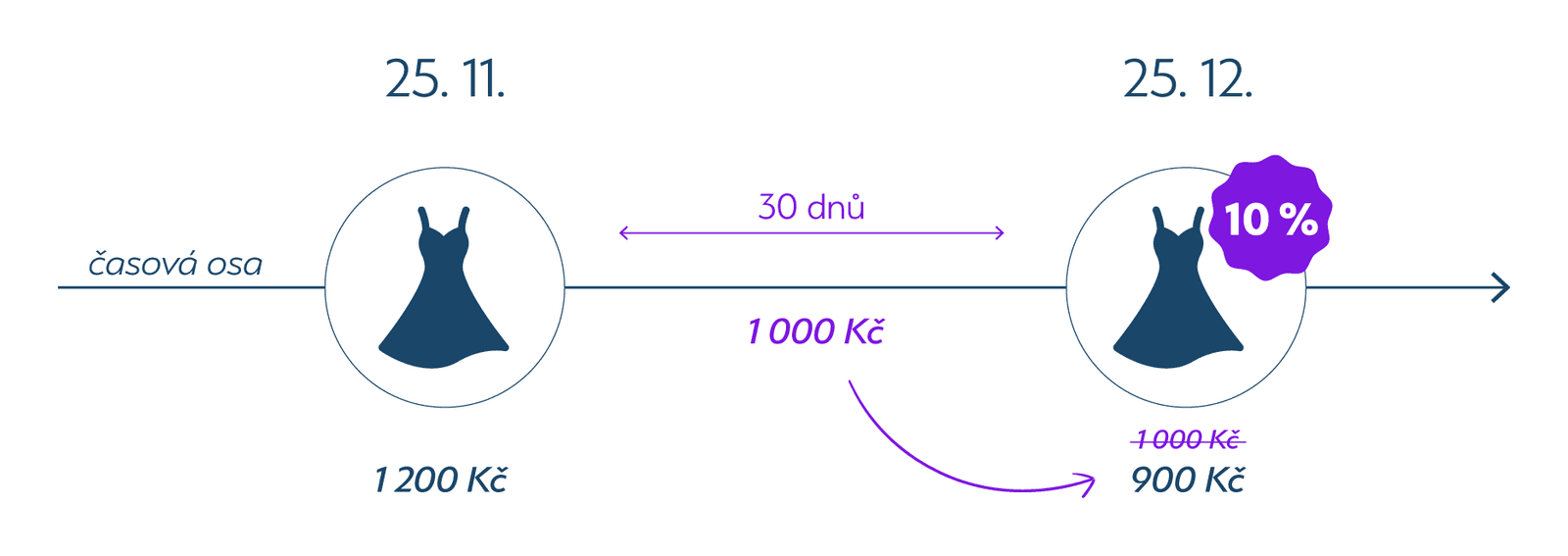
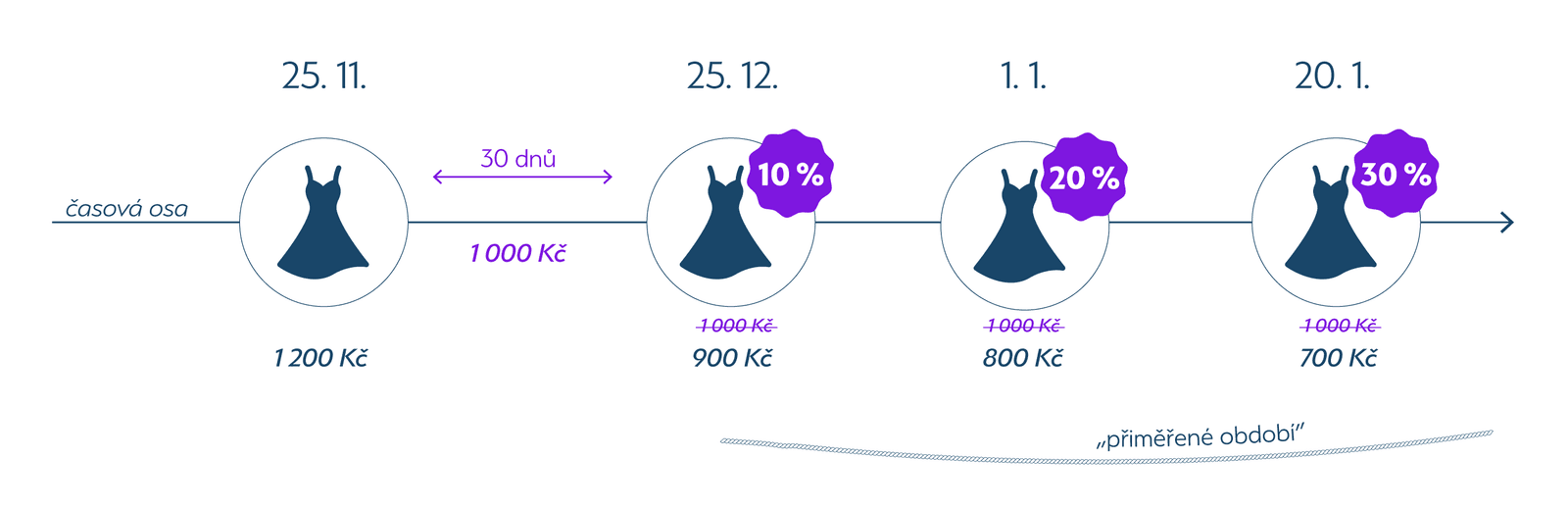
If you want to offer discounted products to your customers, you must use the lowest price at which the product was sold in the past 30 days as the baseline for calculating the discount. Be careful, this rule applies even for time-limited promotions, such as a brief „Happy Hour“ sale.
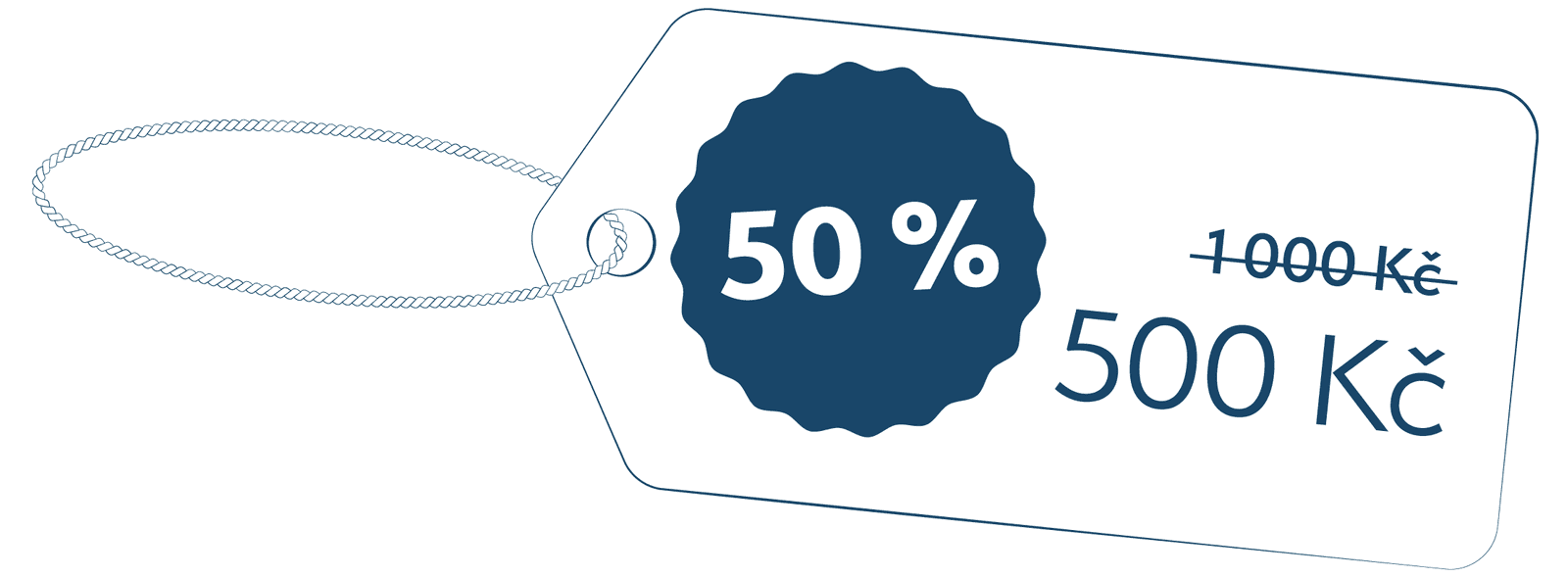
The product’s price tag must include at least two prices: the current discounted price and the original price from which the discount was calculated, along with the percentage reduction. This ensures that customers can clearly see where the new, lower price comes from.
Why all this? The goal of the regulation is to put an end to common practices where sellers would drastically increase the price shortly before a planned sale—sometimes for just one day—then reduce it back to the original price or slightly below, marketing it as a major discount. An extreme example of this can be seen in some used car dealerships, boasting discounts of several tens of percent, based on the original prices the cars were sold for when brand new at official dealerships.
Exceptions to the New Rule
The above process applies only to retail, specifically the B2C sector, covering both physical stores and e-shops. However, the 30-day rule does not apply to services, digital content, or perishable goods, such as certain foods, flowers, and similar products.
Additionally, the rule does not apply when the price is conditioned on certain characteristics of the recipient. For example, discounts on flowers for women on International Women’s Day, gift codes sent to individuals on their birthdays, or loyalty discounts for frequent buyers are exempt. Does this seem like a form of discrimination? Paradoxically, it kind of is.
There’s another important point to consider. If a discount is visible to anyone, the 30-day rule must be followed. For instance, if you display a banner on your website offering products at a discounted price, you must adhere to the monthly timeframe for calculating the discount. However, if the offer is sent via email marketing, the rule does not apply, as you are targeting a limited group of people.
New Rules Also Apply to Discount Codes
One of the areas affected by the new 30-day rule is discount codes. If a discount code is displayed on a banner on the e-shop for everyone to see, the rule applies.
An exception is made for codes that are sent only to selected customers, for example, on their birthdays or as part of a loyalty program. This is why e-shops should focus more on building loyalty programs. The same applies to codes provided by influencers.
Consider Renaming the „Order“ Button
Another change under the new regulations affects buttons on e-shops, newsletters, and other platforms. Buttons now must be labeled clearly to indicate that the customer is committing to a payment. For instance, you should rename the button to something like “Order with Payment Obligation,” “Buy Now,” or “Confirm Purchase.” Simply using “Order” is no longer sufficient.
If the button text remains unchanged, the purchase contract will be invalid. In such cases, the customer is not obligated to accept or pay for the goods, and you will have to bear the shipping costs to and from the customer.
Forget About Unordered Items in the Cart
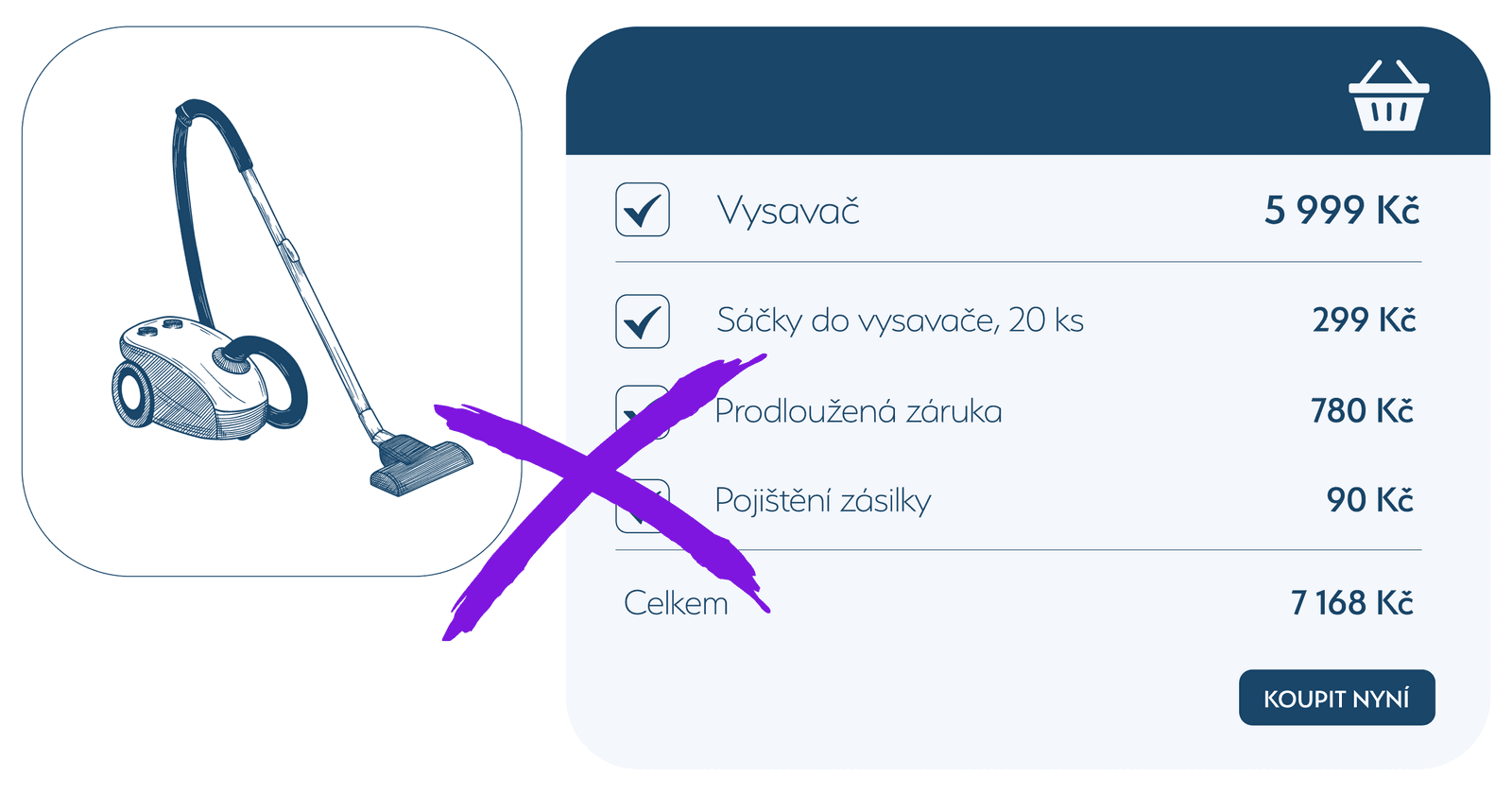
As of this January, tricks where an e-shop automatically added items to a customer’s cart through pre-checked boxes, for products the customer didn’t order, are no longer allowed. The common argument from sellers that “the consumer saw what was in the cart before confirming the order and could have removed it” is no longer valid.
Let’s take the example of purchasing a vacuum cleaner. After adding it to the cart, the e-shop automatically throws in a pack of bags, an extended warranty, and shipment insurance. The price suddenly jumps by several hundred crowns. Under the new rules, this practice is no longer allowed. The exception is for free bonuses, such as small gifts.
Additionally, if a customer wants to buy something like bags or filters as a one-time purchase, they must not be confronted with an offer for a subscription (recurring delivery). Everything must be manually confirmed by the customer each time.
You Must Now Verify and Explain Reviews
Do you have reviews and ratings on your website that appear to be from real customers? According to new regulations, you are now required to explain how you ensure their authenticity. The practice of merchants writing “reviews” themselves or hiring others to write them is no longer permitted. Simply put, you must now prove a connection between the review and a specific purchase.
From now on, your website must include information on how you verify reviews, ensure they are genuine, and confirm that the customer actually purchased the specific product. If you display average ratings or select and filter reviews, you must disclose this honestly. And be aware that a review now includes not only written feedback but also ratings in the form of stars, points, thumbs up, and similar systems.
How should you handle this? The law leaves that up to the sellers. One solution could be to allow reviews only from logged-in buyers. Additionally, these rules apply not only to e-shops but also to online marketplaces, comparison websites, and auction or resale platforms.
Penalties Are Severe: Don’t Ignore the Rules
Thinking of ignoring the new regulations because no one seems to fully understand them yet? We strongly advise against that. The penalties for violating these rules are significant. The Czech Trade Inspection Authority, which oversees business compliance, can issue fines of up to 5 million CZK. If your e-shop operates across borders, the fine could be as high as 4% of your annual turnover, even if you occasionally sell to customers in countries like Slovakia.
Moreover, if a customer suspects that you manipulated prices during their purchase, they have the right to cancel the contract within 90 days. In an extreme case, someone could buy a car from your used car dealership, drive it for three months, and then return it with more wear and tear, claiming you deceived them with the price.
It’s your responsibility to prove how discounts were calculated if necessary. We strongly recommend keeping a record of prices to be prepared in case of an inspection. In this case, the burden of proof is on you, not the authorities. You must demonstrate that you followed the rules correctly.
And that’s not all. There are more exceptions, regulations, and potential penalties. Feeling overwhelmed and need some guidance? Get in touch with us, and we’ll gladly help. We can take over the management of your campaigns to ensure they comply with every possible regulation. Alternatively, we can organize a training session to provide you with all the knowledge you need.